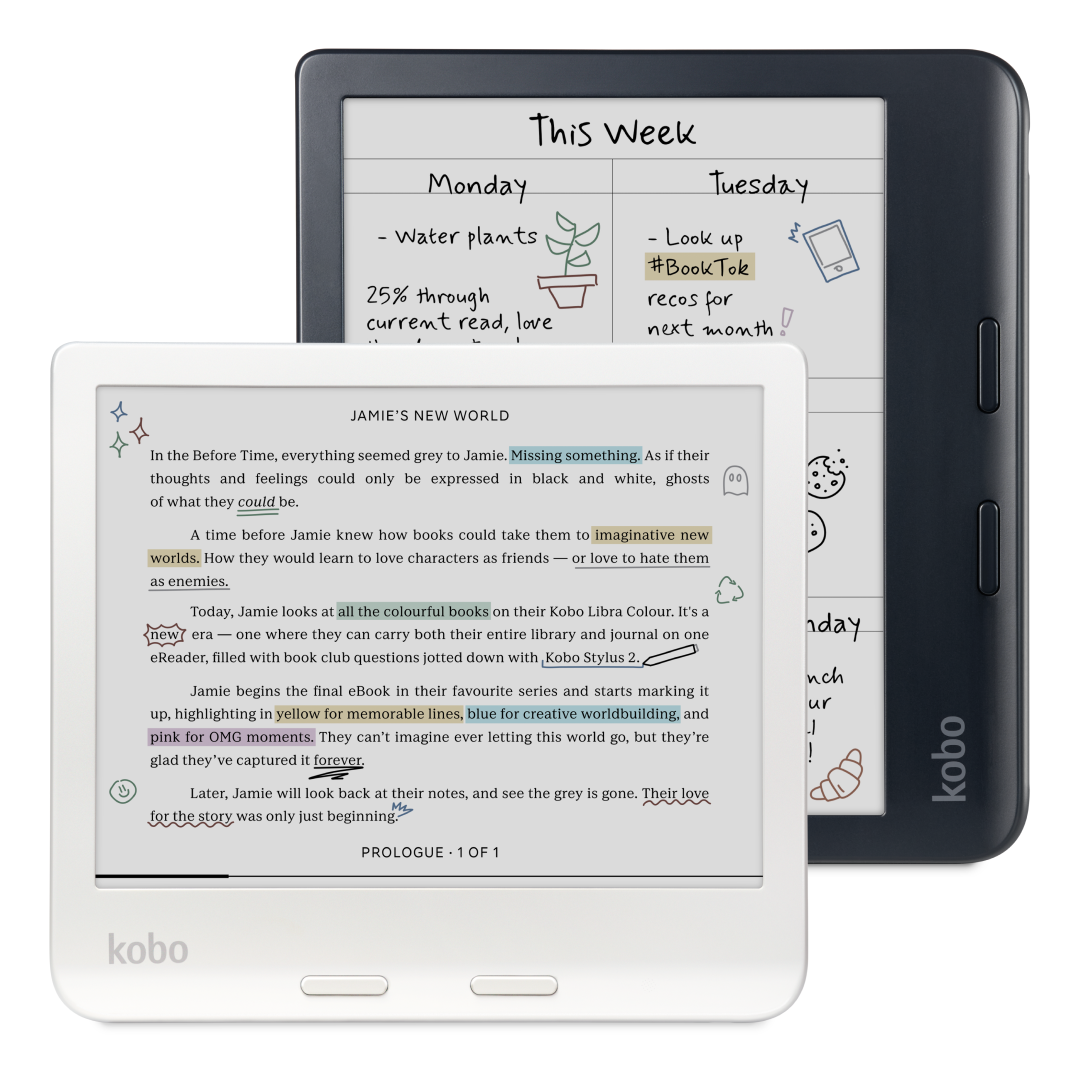
The Kobo Libra Colour is $259.99 today. It launched in 2024 at $219.99. That is $40, or 18 percent, in about eighteen months.
On 13 August, E Ink put a number on why. At its Q2 earnings conference in Taipei, the company cut its 2026 revenue growth forecast to 10–15 percent, down from 20–25 percent. It named memory prices as the cause.
An e-reader is mostly a cheap Android device with an expensive screen
Inside almost every e-reader sits DDR4 RAM and NAND flash. Only the display is exotic. The rest is commodity silicon, and commodity silicon is what got expensive this year.
DRAM contract prices rose 95 percent quarter-over-quarter in Q1 2026, then 63 percent in Q2. Q3 is forecast at 13–18 percent, with NAND at 10–15 percent. The rate is slowing. The direction is not. Spot prices have run as much as 172 percent above contract.
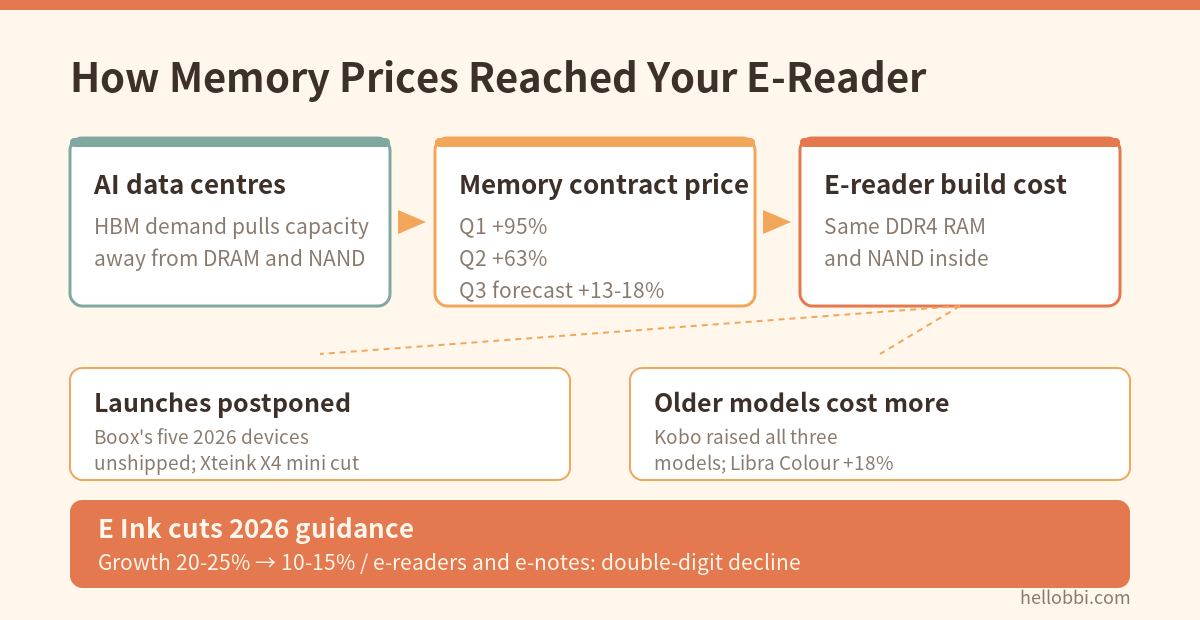
The driver is AI. HBM demand pulled capacity away from conventional DRAM and NAND, and Samsung and SK hynix have both signalled the shortage could run past 2027. E-readers are at the bottom of that queue. Nobody reallocates a fab to serve a $150 reading device.
E Ink is doing fine — its consumer business is not
This is not a company in trouble. Q2 net profit was NT$3.73 billion, up 26 percent year-on-year. First-half profit rose 26 percent as well. Gross margin slipped only slightly, from 60 to 58.7 percent. Capex stays at NT$8 billion.
The damage is concentrated. Chairman Johnson Lee described a “double-digit revenue decline” for e-readers and e-notes, while the IoT segment — mostly electronic shelf labels for large US and European retailers — keeps its 20–25 percent growth guidance. Digital signage grows high single digits.
| E Ink 2026 guidance | Direction |
|---|---|
| Total revenue growth | Cut from 20–25% to 10–15% |
| E-readers and e-notes | Double-digit decline |
| IoT / electronic shelf labels | 20–25% growth, unchanged |
| Digital signage | High single-digit growth |
| Capex | NT$8bn, unchanged |
| Peak quarter | Moved from Q3 to Q4 |
The seasonality line is the one worth keeping. “The third quarter used to be a peak season for E Ink. The pattern will be different this year,” Lee said. “The fourth quarter will be the peak season this year.” Panels ship before devices do. A peak pushed into Q4 means launches pushed into Q4.
Kobo already raised prices twice
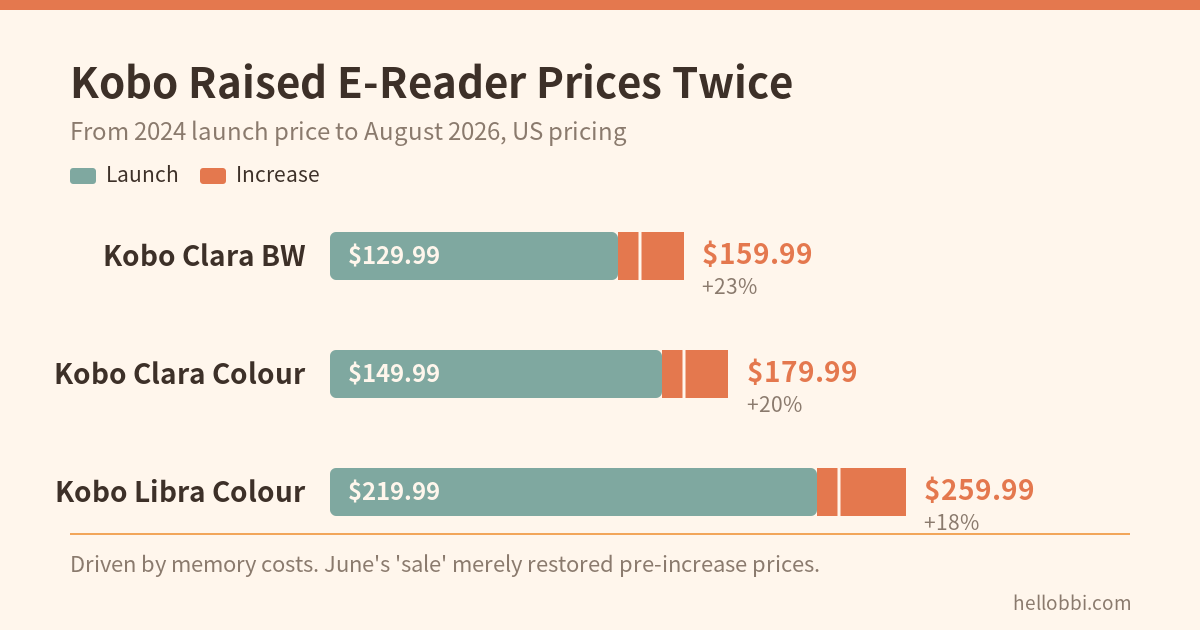
The first two rounds were $10 each. This one was $20–$30, applied simultaneously across Kobo’s own store, its Amazon storefront and authorised retailers. That pattern rules out a distributor margin or a temporary listing glitch.
Then in June, Kobo ran a sale: Clara BW at $139.99, Libra Colour at $229.99. Those are the exact pre-increase prices. Returning to where you were is not a discount.
Checking the store today, 18 August, Kobo is discounting again: Clara BW at $139.99, Clara Colour at $159.99. The Libra Colour stays at $259.99. Raise, discount, repeat — only the person who pays list price loses.
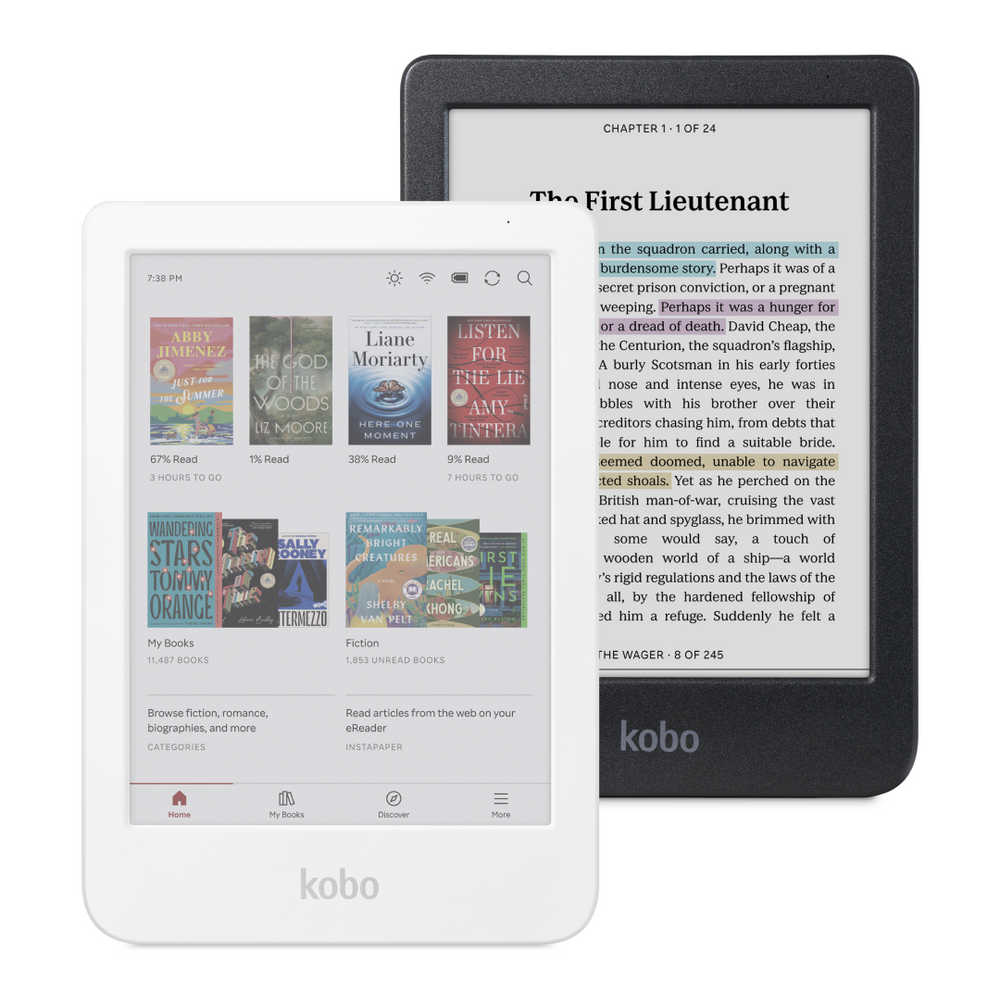
Forum reaction splits along an obvious line. One reader wrote that the increase pushes them away from Kobo without pushing them toward Kindle, and that they will stay on iPad apps until something changes. A current Libra Colour owner said the increase did not feel oppressive to them. People who already bought and people about to buy are having different conversations.
The timing is the interesting part. Days after May’s increase, a reader asked in the comments of an e-reader blog whether the RAM shortage had finally reached e-readers. E Ink confirmed exactly that on 13 August. The comment section beat the earnings call by three months.
The increase was not US-only. One reader reported the Libra Colour at €270 in Belgium, and others noted rises in Spain and the UK. In Canada only the two Clara models went up, by about $10 each. That conversation collected on Reddit.
The blog’s own writer put it more bluntly in his reply: he could not find another e-reader company that had abruptly raised prices on models already on sale, and noted that if Amazon had done it, people would be furious.
Fewer devices is the part that actually hurts
E Ink said customers are postponing launches, and the release calendar agrees. Boox has five devices announced for 2026 — Palma 3, Note Air6 C, Note Mini C, Tab Elite and the Picco — and none has shipped. The Picco got a teaser in late July and nothing since. Xteink discontinued the X4 mini on 13 August to concentrate on the X4 Pro.
Kobo’s own launch film for the Libra Colour, made back when it cost $219.99.
E Ink also noted that demand for previous-generation models has fallen, because those got more expensive too. So the loop closes: new devices are delayed, old devices cost more, and buyers wait. Price increases are survivable. A shrinking menu is worse.

What this looks like from Seoul
Here is a wrinkle most English coverage skips. Neither Kindle nor Kobo hardware is sold officially in South Korea. Buying one means importing it, and Korean customs applies a de minimis threshold: $200 for goods shipped from the United States, $150 from everywhere else. Exceed it by a dollar and the entire value is taxed, not just the excess. The assessed value includes local sales tax and international shipping.
So Kobo’s increase quietly moved devices across a tax line. The Clara Colour at $149.99 cleared the threshold comfortably. At $179.99 plus shipping, it does not. The Libra Colour was already over at $219.99 and is further over now.
Currency compounds it. The won traded at 1,412 to the dollar on 13 August, near the top of a multi-year range. A $259.99 Libra Colour is roughly ₩367,000 before duty, VAT and shipping. Korean buyers are absorbing a hardware increase, an import tax step and a weak won at the same time.
Domestic devices — the Crema line sold through Yes24 — are priced in won and serviced locally, which removes the customs question entirely. They are not immune to component costs, though. No Korean price increase has been announced yet. That is a thing to watch, not a thing that has happened.
So should you buy now
E Ink has moved its peak to Q4. Amazon is reported to have several Kindles due late in the year. Boox still owes us five devices. If anything lands, it lands in the fourth quarter, and current models usually soften in price when successors appear.
If you can wait, wait. If you cannot, the practical move is to stay under whatever your import threshold is — for Korea, $200 shipped from the US, which the Clara BW just clears. Colour models now need tax in the arithmetic from the start.
One caution against waiting too patiently. Analysts expect the memory shortage to persist into 2027, possibly 2028. Waiting may get you a newer device. It will not get you 2024 prices. What Q4 hardware is priced at is the next real data point.
Sources
- Taipei Times — E Ink downgrades its revenue growth forecast (14 Aug 2026)
- Good e-Reader — E INK lowers its revenue forecast for 2026
- eReadersForum — Kobo Has Raised Prices Again
- Good e-Reader — E-notebooks and e-Readers are getting more expensive in 2026
- Tom’s Hardware — Memory price surge begins to cool
Leave a Reply